Evaluating Hikayoshi for Japanese-Inspired Typography Projects
In the landscape of digital typography, finding a typeface that authentically captures the essence of Japanese calligraphy while remaining functional for modern design applications can be challenging. Many designers seek fonts that bridge the gap between traditional brushwork and contemporary layout requirements. Hikayoshi emerges as a specialized solution in this niche, offering a distinct aesthetic that blends organic movement with structural clarity. This evaluation explores the characteristics, technical specifications, and practical applications of Hikayoshi to help designers determine if it aligns with their specific project needs.
Understanding the Design Philosophy
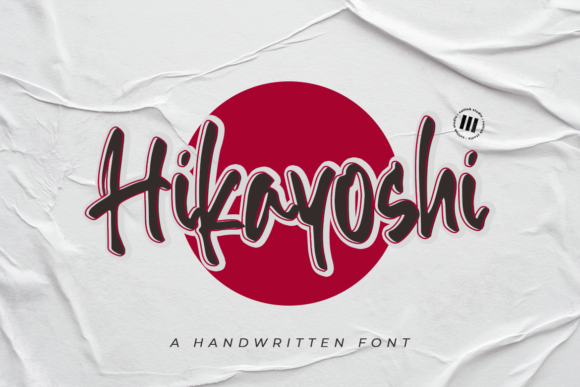
Hikayoshi is categorized as a Japanese-inspired display font. Unlike standard sans-serif or serif typefaces that prioritize neutrality, display fonts are designed to make a strong visual statement. The core appeal of Hikayoshi lies in its ability to mimic the fluidity and weight variations of hand-drawn brush strokes. It does not attempt to replicate traditional Kanji characters but rather adopts the stylistic cues associated with them—such as thick downstrokes, sharp terminals, and dynamic spacing.
This approach makes the font inherently decorative. When used correctly, it adds texture and cultural resonance to a design without requiring complex graphic overlays. However, because it is a "display" font, its primary function is headline work or large-scale text, rather than body copy. Understanding this distinction is crucial before integrating it into a layout. The font’s unique character set allows it to stand out in crowded visual environments, making it particularly effective for branding elements where memorability is key.
Technical Advantages: PUA Encoding and Glyph Access
One of the most significant technical features of Hikayoshi is its use of Private Use Area (PUA) encoding. To understand why this matters, one must look at how standard fonts handle special characters. Traditional Unicode encoding has limited slots for exotic glyphs, ligatures, and stylistic alternates. By utilizing PUA encoding, Hikayoshi bypasses these limitations, allowing the creator to include an extensive library of custom glyphs, ligatures, and decorative elements within a single file.
For the end-user, this means access to a richer typographic palette. Instead of relying on external icon sets or manually creating custom letterforms, designers can access these unique shapes directly through their font software. While PUA fonts require a specific workflow—often involving manual selection of characters via a glyph panel or dedicated software—the payoff is a high degree of customization. This ease of access to complex ligatures ensures that designs can achieve a cohesive, hand-crafted look without sacrificing efficiency during the production phase.
Ideal Use Cases and Applications
The versatility of Hikayoshi is best realized in contexts where visual impact takes precedence over lengthy reading comprehension. Several specific scenarios highlight where this font excels:
- Food Menus: The organic, brush-like quality of Hikayoshi pairs naturally with culinary themes. It evokes the imagery of chopsticks, soy sauce stains, and hand-written signs found in traditional eateries. For restaurant menus, especially those featuring Asian cuisine, sushi bars, or fusion dining, the font provides an immediate thematic anchor.
- Event Posters and Flyers: In promotional materials for festivals, concerts, or cultural events, headlining text needs to grab attention instantly. Hikayoshi’s bold forms and intricate details draw the eye, making it an excellent choice for main titles. The font’s energy complements the dynamic nature of event marketing.
- Branding and Logos: For brands seeking to convey heritage, craftsmanship, or artistic flair, Hikayoshi offers a distinctive logotype potential. Its unique ligatures can be combined to create custom wordmarks that feel bespoke and memorable.
- Editorial Headers: Magazine covers, blog post headers, and article subheads benefit from the font’s ability to break up monotony. A single line of text in Hikayoshi can serve as a powerful visual separator between sections of content.
Tradeoffs and Limitations
No typeface is a universal solution, and Hikayoshi comes with specific constraints that designers must consider. The most prominent limitation is legibility at small sizes. Display fonts with high contrast between thick and thin strokes often become difficult to read when scaled down. Therefore, Hikayoshi should generally be avoided for body text, captions, or any interface element requiring quick scanning.
Additionally, the reliance on PUA encoding can present compatibility hurdles. Not all design software handles PUA fonts seamlessly. Users may need to invest time in learning how to navigate the glyph panel in applications like Adobe Illustrator or InDesign. Furthermore, web implementation of PUA fonts can be tricky, often requiring custom CSS @font-face declarations and careful mapping to ensure characters render correctly across different browsers.
There is also the risk of overuse. Because Hikayoshi is visually dominant, using it excessively can lead to visual fatigue. It works best as an accent or a headline tool, paired with a neutral, highly readable sans-serif or serif font for supporting text. Failing to balance Hikayoshi with simpler typefaces can result in a cluttered and unprofessional appearance.
Alternatives and Comparative Considerations
If Hikayoshi does not meet your specific needs, several alternatives exist depending on the desired outcome. For projects requiring a more traditional, historically accurate Japanese typeface, licensed fonts such as those from Monotype or Linotype offer extensive Kanji coverage and rigorous typographic standards. These are better suited for long-form text and formal documentation.
For designers who want the brush-stroke aesthetic but prefer easier usability, there are Unicode-compliant brush fonts available. These fonts do not rely on PUA encoding, making them easier to embed in websites and share across teams. However, they may lack the unique ligatures and custom glyphs that make Hikayoshi distinctive. If the goal is purely minimalist and modern, a clean geometric sans-serif might be more appropriate, stripping away the decorative elements entirely.
Decision-Making Insights
Selecting Hikayoshi requires a clear understanding of the project’s hierarchy and audience. Ask yourself whether the goal is to evoke emotion and atmosphere or to communicate information efficiently. If the latter is the priority, Hikayoshi may hinder readability. If the former is the goal, its unique character set becomes a valuable asset.
Consider the medium of distribution. For print materials like posters, menus, and packaging, Hikayoshi’s intricate details will reproduce well and add tactile visual interest. For digital interfaces, especially mobile apps, the complexity of the glyphs may not scale effectively, and the PUA encoding could introduce technical bugs.
Finally, evaluate your team’s technical comfort level. If you are comfortable navigating glyph panels and managing non-standard font encodings, Hikayoshi offers a high return on investment in terms of unique design output. If your workflow demands simplicity and speed, the learning curve associated with PUA fonts might outweigh the benefits.
In conclusion, Hikayoshi is a powerful tool for designers working on projects that demand a strong Japanese-inspired aesthetic. Its strength lies in its ability to provide unique, brush-style graphics through accessible PUA encoding. By respecting its limitations regarding size and readability, and by pairing it strategically with simpler typefaces, designers can leverage Hikayoshi to create stunning, culturally resonant visuals for menus, posters, and branding materials.